


What are you trying to do?
Replacing Business Equipment
It never breaks at a good time. The walk-in cooler on a Friday, the hoist during alignment season, the compressor mid-job. Replacing equipment is partly a financing question — and partly a timing question: how to keep the business running while deciding well.
Last reviewed September 22, 2026 · Makwa Path Financial · Indigenous-owned · Canada-wide
Can I finance a replacement for equipment that failed?
Yes — replacement equipment is one of the most common situations explored: financing or leasing for the new or used machine that takes over from the one that gave out. Because the business already operates, the review is usually built around the operation, not a startup profile. Approval and lender criteria still apply, and the condition of the replacement asset matters.
Common replacement situations
The calls we get most:
- Restaurant refrigeration — a walk-in cooler or freezer that finally failed
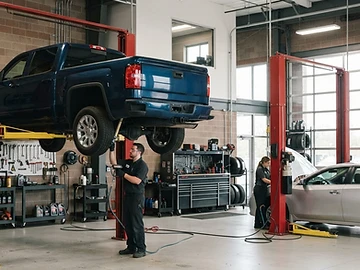
- Shop hoists and lifts — cylinders, safety and the decision to replace rather than repair
- Compressors — the machine every other machine depends on
- CNC and production machinery — worn beyond accuracy
- Work trucks and vans — at the age where repair beats payments no longer
- Tire and alignment equipment in busy shops
Replace or repair — the honest first question
Sometimes a repair buys two good years for a fraction of a replacement — and that's the right call. Sometimes a failing machine is quietly costing more in downtime than a payment would. The review looks at the real numbers: repair cost and risk against replacement cost and what the new machine adds.
What we won't do is push a replacement because it's easier to finance. The right answer first, then the financing for it.
New or used for a replacement
Both can be explored. A used replacement with service history can be the fastest route back to work; a new unit under warranty can be worth it when the failed machine proved how costly downtime is. Condition, hours and inspection are part of the review, and eligibility varies by asset and lender.
Keeping the business running meanwhile
Timing is part of the plan: what the business loses per day without the machine, what's realistic for delivery and install of the replacement, and how the payment schedule lines up with getting back to full operation. If bridging the gap needs working capital as well, that's reviewed alongside the asset — one plan.
Common questions
Can I finance a used replacement?
Yes, where the asset, its condition and its service history fit the criteria. Hours (for machinery), age and inspection are part of the review — eligibility varies by asset and lender.
Should I repair instead?
Sometimes, honestly, yes — and you'll be told so when the numbers say so. The review compares repair cost and remaining risk against replacement cost and added value before recommending anything.
How fast can this move?
No fixed turnaround is promised, but replacement situations are treated as the time-sensitive cases they are — and you'll get a straight answer about what's realistic rather than a hopeful one.
You may also need
Related pathways, assets and industries for the same situation.
Next step
Explore it with Makwa Path — in your own words.
Describe the situation you're in. We'll help identify the likely pathway and explain the next step plainly — no banking language required.
Financing and leasing are subject to approval and applicable lender criteria. Exploring options is not an approval, guarantee of financing or commitment to lend. Prefer a person? Request a callback.