


Equipment financing
Auto Repair Equipment Financing
A shop is its equipment: the hoist that lifts, the alignment machine that calibrates, the diagnostic platform that finds the fault. Makwa Path helps Canadian auto repair shops explore financing for the equipment that turns bays into revenue.
Last reviewed September 22, 2026 · Makwa Path Financial · Indigenous-owned · Canada-wide
What can auto repair equipment financing cover?
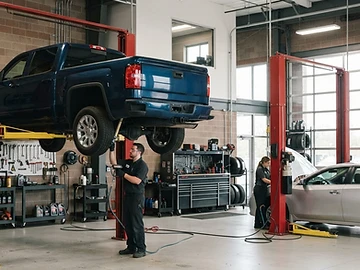
Financing or leasing for the equipment a repair shop runs on: vehicle hoists and lifts, wheel alignment systems, diagnostic platforms and scanners, air compressors, tire changers and balancers, brake lathes, and shop tooling — new or used. Terms vary by equipment, shop and lender; approval and lender criteria apply.
Common shop equipment financed
The equipment that most often needs financing in this trade:
- Vehicle hoists and lifts — two-post, four-post, in-ground and specialty
- Wheel alignment systems — including camera-based alignment racks
- Diagnostic equipment — scan tools and platforms, with software subscriptions in some arrangements
- Air compressors and air systems — the backbone of the shop
- Tire equipment — changers, balancers, brake lathes
- Shop tooling, transmission jacks, oil drains and exhaust extraction
Starting, replacing or adding a bay
A first hoist and a starter tool package is the classic startup shop review. A compressor that finally quit, or a hoist past safe service, is a replacement review — downtime is the real cost. A second alignment rack or a fourth hoist for a booked-out shop is an expansion review built on the shop's track record.
New or used shop equipment
Both are explored. Used hoists and alignment machines from closed shops are common on the market and can be genuine value — with condition, certification status and parts availability as part of the review. New equipment brings warranty and installation support. Eligibility varies by equipment and lender.
Why shops finance instead of waiting
For a shop, an equipment decision is really a booking decision: the hoist converts an empty bay into a billable one, and the alignment rack decides whether tire work stays in-house or gets referred down the road. The review puts the payment beside the work the equipment would actually capture — the shop's own booking pattern decides, not a sales pitch.
How the review works
Start with the shop's situation — booked out, opening, replacing, or growing. The review sizes the equipment to the shop's real volume, then lays out financing or leasing options with payment, term, rate, fees and total cost in plain language.
Common questions
Can a new shop finance its first hoist?
It's one of the most common startup-asset reviews we see. Startup situations are reviewed around the plan, the location and the owner's trade experience, with lender criteria applying — no outcome is guaranteed, but the review is thorough and honest.
Is used shop equipment financeable?
Often, yes — condition, service history and certification matter, especially for lifting equipment. The review weighs used value against new-equipment warranty honestly.
Can I add equipment one bay at a time?
That's frequently the smart shape of a growing shop: equipment phased to real demand rather than all at once. Reviews can plan the first step and keep the next one in view.
You may also need
Related pathways, assets and industries for the same situation.
Next step
Explore it with Makwa Path — in your own words.
Describe the situation you're in. We'll help identify the likely pathway and explain the next step plainly — no banking language required.
Financing and leasing are subject to approval and applicable lender criteria. Exploring options is not an approval, guarantee of financing or commitment to lend. Prefer a person? Request a callback.