


Commercial Vehicle Financing
Commercial Vehicle Financing & Leasing
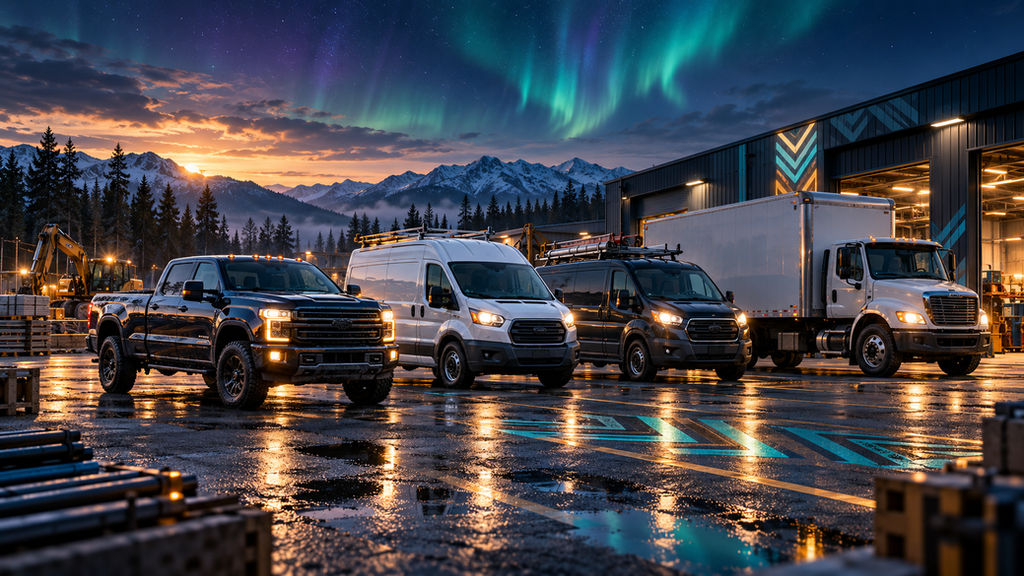
Your vehicles do more than get you from one place to another — they help your business get the job done. From work trucks and cargo vans to service vehicles, heavy trucks and fleet additions, Makwa Path helps First Nations, Métis and Inuit business owners explore financing and leasing for eligible vehicles their business is purchasing or leasing.
Whether you're replacing a vehicle, adding capacity or building a fleet, we'll work with you to understand what you need and help you explore the financing path that fits your business.
Last reviewed September 30, 2026 · Makwa Path Financial · Indigenous-owned · Serving Manitoba, Saskatchewan, Alberta, British Columbia, Western Ontario, Yukon, Northwest Territories and Nunavut
What is commercial vehicle financing?
Commercial vehicle financing can help a business put the vehicles it needs to work, deliver, grow and serve customers into operation.
That might include work trucks, cargo vans, service vehicles, heavy-duty trucks, commercial trailers or additional fleet units. Depending on the situation, financing or leasing may be explored around both the vehicle and the business using it.
Makwa Path looks at what the vehicle will help your business accomplish — reaching more customers, adding a crew, expanding a route, increasing capacity or supporting the next stage of growth — and helps explore financing paths through the BIZII Finance Network.
The goal is simple: match the right vehicle with the work your business is ready to do next.
Vehicles this pathway covers
Vehicles businesses commonly purchase or lease through this pathway include:
- Work trucks — pickups, flatbeds, dumps and service bodies owned by the business
- Cargo vans and sprinter-style vans for delivery, trades and service calls
- Service vehicles — utility trucks, mechanics' trucks and mobile workshops
- Heavy trucks — day cabs, highway tractors and vocational trucks
- Commercial trailers — equipment, utility, flatdeck and refrigerated trailers
- Fleet additions — adding vehicles as the business grows
Loan or lease — what’s the difference?
Both can be useful ways to put the right vehicle into your business.
A loan is designed around ownership. A lease gives the business use of the vehicle for an agreed term. Which path fits best can depend on how long you plan to keep the vehicle, how it will be used and what works comfortably within the business.
Makwa Path helps you compare the options in plain language so you can choose a path that fits the way your business operates.
New or used
New and used commercial vehicles can both be strong choices.
A new vehicle may offer the advantages of newer technology and warranty coverage. A quality used vehicle can be an effective way to add capability while making smart use of your budget.
The right choice is the vehicle that fits the work, the business and where you want to go next.
How is this different from a personal auto loan?
Commercial vehicle financing is built around a vehicle being used as part of the business.
That could be a work truck for another crew, a cargo van for service calls, a highway tractor for a new route or a vehicle that helps the business reach more customers.
If you are buying a vehicle for personal use, the Auto Loans path is there for you. If the vehicle is helping your business work and grow, Makwa Path can help you explore the commercial vehicle path.
Common situations
Commercial vehicles can support all kinds of business growth.
A contractor may be adding another truck. A trades business may be outfitting a service van. A courier company may need another delivery vehicle. A transport operation may be adding highway equipment. An established business may simply be ready to replace a vehicle it has outgrown.
When the vehicle is part of a larger opportunity — such as a new contract, another crew or additional equipment — Makwa Path can look at the bigger picture and help organize the next step.
Common questions
Can a new business finance a work vehicle?
It can be explored. Startup situations are reviewed differently than established businesses, and lender criteria differ. The honest answer depends on the business, the vehicle and the whole picture — no outcome is guaranteed.
Lease or loan — which is better?
Neither is universally better. A lease can lower payments but has end-of-term terms to understand; a loan builds toward ownership at a typically higher payment. The right choice depends on how the vehicle is used and how long you'll keep it — both are explained plainly.
Do you finance the whole fleet at once?
Multiple vehicles behind one goal — a contract, an expansion, a route — are reviewed as one opportunity rather than as separate, unrelated applications. Start by describing the situation.
You may also need
Related pathways, assets and industries for the same situation.
Next step
Explore it with Makwa Path — in your own words.
Describe the situation you're in. We'll help identify the likely pathway and explain the next step plainly — no banking language required.
Financing and leasing are subject to approval and applicable lender criteria. Exploring options is not an approval, guarantee of financing or commitment to lend. Prefer a person? Request a callback.