


Industries
Manufacturing Business Financing
Manufacturing is a capacity business: the machines set the ceiling on revenue, and the backlog sets the case for more machines. Makwa Path helps Canadian manufacturers and machine shops explore the financing mix that production actually runs on.
Last reviewed September 22, 2026 · Makwa Path Financial · Indigenous-owned · Canada-wide
What financing might a manufacturing business use?
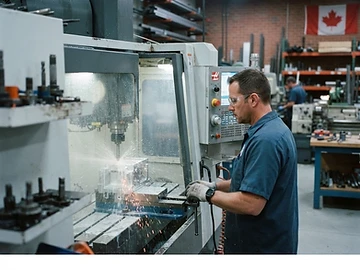
Mostly equipment and cash-flow financing: CNC machines, mills, lathes and fabrication equipment, material handling — forklifts, conveyors, racking — plus working capital to buy stock and feed production between purchase orders. The review almost always comes down to capacity: a machine backed by booked work is a machine whose math works. Approval and lender criteria apply.
What manufacturers typically finance
The mix shifts with the shop:
- Job shops — CNC centers, mills, lathes, and the tooling that keeps them fed
- Fabricators — welders, plasma and laser systems, press brakes
- Production lines — processing machinery, conveyors, controls
- Material handling — forklifts, racking, loading-dock equipment
- Any stage — working capital for stock and labor between purchase orders
Capacity, backlog and the machine decision
The honest test in manufacturing: what will keep the new machine fed? A shop with a months-long backlog and signed purchase orders is a different review than a shop buying capacity speculatively. The first is usually fundable arithmetic; the second is a harder conversation about timing — and you'll get the honest version of it.
Machine plus the capital that feeds it
A CNC center with no stock and no labor budget makes nothing. In contract-driven situations, the machine and the working capital to feed it — material, tooling, labor — are reviewed as one plan against the purchase orders behind them.
New, used and the control-age question
Both markets are real. On used CNC equipment especially, the control system's age matters as much as the machine's hours — a well-kept iron with an outdated control can limit the work it can take. The review weighs hours, control age and service history against the work actually booked.
How the review works
Start with the backlog and the bottleneck: which machine, which job, which numbers. The review matches machinery to the demand, then lays out financing or leasing options with payment, term, rate, fees and total cost in plain language.
Common questions
Can a small job shop finance a second machine?
It's one of the most common reviews: the second machine that chases the backlog the first one proved. The review is built on the shop's actual booked work — no outcome is guaranteed, but the arithmetic is honest.
New or used CNC equipment?
Both are explored. Hours, control age and service history are the review on used iron; warranty and support are the case for new. The right answer depends on the work booked and who maintains it.
Can equipment and working capital be combined?
Where eligible, yes — the machine plus the stock and labor that feed it, one plan, especially in purchase-order-driven situations.
You may also need
Related pathways, assets and industries for the same situation.
Next step
Explore it with Makwa Path — in your own words.
Describe the situation you're in. We'll help identify the likely pathway and explain the next step plainly — no banking language required.
Financing and leasing are subject to approval and applicable lender criteria. Exploring options is not an approval, guarantee of financing or commitment to lend. Prefer a person? Request a callback.