


Industries
Agriculture Financing
Farming is capital-intensive and revenue-seasonal at the same time — machines cost year-round, income arrives in windows. Makwa Path helps Canadian farms and agriculture businesses explore financing shaped around how the operation actually earns.
Last reviewed September 22, 2026 · Makwa Path Financial · Indigenous-owned · Canada-wide
What financing might an agriculture business use?
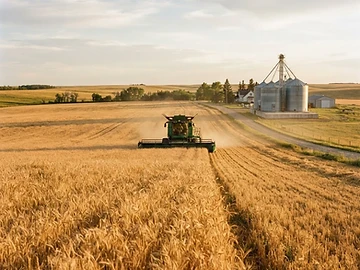
Mostly machinery and cash-flow financing: tractors and implements, harvesting equipment, grain handling, trucks and trailers, and working capital timed to input seasons where eligible. Because farm revenue is seasonal, payment structure and timing are part of the review, not an afterthought. Terms vary by machine, operation and lender; approval and lender criteria apply.
What agriculture businesses typically finance
The mix shifts with the operation:
- Machinery — tractors, implements, harvesters, the backbone list
- Grain handling — augers, bins, dryers where eligible
- Transport — trucks and trailers for grain, livestock and inputs
- Custom work — the equipment that turns a farm into a service business
- Any stage — working capital timed to input seasons where eligible
The seasonal reality
Input costs arrive in spring; revenue arrives after harvest — and a short weather window can decide the year. Financing reviews in agriculture therefore treat payment timing as a core part of the structure: where available, payments timed to the windows the operation actually gets paid in.
The review also weighs what a machine does to the season: equipment that lets the operation hit a short weather window — or capture committed custom work — is worth more than its sticker price suggests.
Custom work changes the math
Many farms grow by selling work, not just crops — baling, seeding, hauling, manure. Equipment bought for custom work is reviewed against the contracts behind it: the baler sized to the committed acres, not to hope. That makes these reviews closer to contract-fulfillment than to pure farm financing.
New or used machinery
Both are explored, and the used machinery market is a normal part of agriculture — with hours, maintenance records and inspection as part of the review. New machinery brings warranty and precision features; used machinery often brings the better payment for a machine that gets seasonal use. Eligibility varies by machine and lender.
How the review works
Start with the season and the gap: what work needs doing, what machine does it, and when the operation gets paid. The review covers the asset, the operation and the revenue cycle, then lays out options with payment, term, rate, fees and total cost in plain language.
Common questions
Can payment timing match the seasons?
Where available, yes — structures reflecting seasonal revenue can be part of the review. Farm financing that ignores how the operation earns is built wrong; timing is part of the plan.
What about equipment for custom work?
Custom-work equipment is reviewed against the contracts behind it — committed acres, agreed rates, real windows. That context makes the review concrete instead of speculative.
Is used farm machinery financeable?
Yes, where hours, age and condition fit the criteria. Maintenance records strengthen the review; the used market is a normal part of agriculture financing.
You may also need
Related pathways, assets and industries for the same situation.
Next step
Explore it with Makwa Path — in your own words.
Describe the situation you're in. We'll help identify the likely pathway and explain the next step plainly — no banking language required.
Financing and leasing are subject to approval and applicable lender criteria. Exploring options is not an approval, guarantee of financing or commitment to lend. Prefer a person? Request a callback.