


Industries
Trucking Business Financing
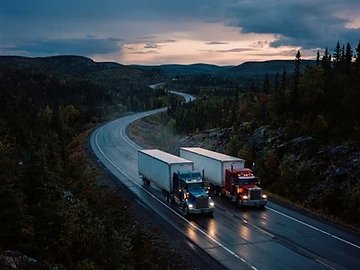
Trucking is a capital business with a simple truth: the truck is the revenue. Makwa Path helps Canadian carriers and owner-operators explore financing for power units, trailers and the working capital that keeps wheels turning between freight payments.
Last reviewed September 22, 2026 · Makwa Path Financial · Indigenous-owned · Canada-wide
What financing might a trucking business use?
Mostly asset and cash-flow financing: highway trucks and tractors (loans or leases), dry van, reefer and specialty trailers, shop and maintenance equipment, and working capital to carry fuel, insurance and repairs between freight payments. Terms vary by equipment age, operation and lender; approval and lender criteria apply.
What trucking businesses typically finance
The asset mix depends on the operation:
- Owner-operators — a first or replacement tractor, often used with engine and DOT-outfit records
- Small fleets — additional power units and trailers as contracts grow
- Specialty carriers — reefer units, flatdecks, bulk and heavy-haul configurations
- Shops — maintenance bays, lifts, tire equipment for in-house service
- Any stage — working capital for fuel, insurance and repair cycles
The cash-flow shape of trucking
Fuel and insurance run constantly; freight pays on 30-to-45-day terms, and some brokers pay slower. That gap — not the truck payment — is what breaks most small carriers, which is why working capital is reviewed alongside the iron, sized to the actual freight payment cycle.
Contract lanes and dedicated freight change the math for the better; the review is built around the loads actually contracted, not a generic average.
New or used iron
Both are explored. A used tractor with documented engine work and recent DOT history can be the right unit for an owner-operator; new units bring warranty, fuel economy and longer eligible terms where available. Emissions-system age and condition weigh heavily in the review; eligibility varies by unit and lender.
Adding a truck for a contract
The most common growth call: a carrier wins a dedicated lane or a shipper contract and needs another unit to serve it. That situation — the truck, and the fuel-and-payroll bridge until freight payments arrive — is reviewed as one opportunity against the contract.
How the review works
Start with the operation: the units, the lanes or contracts, and what's breaking or missing. The review lays out loans and leases with payment, term, rate, fees and total cost in plain language — including what happens at end-of-term on leases, before anything is signed.
Common questions
Can an owner-operator finance a first truck?
It can be explored — reviews weigh the contracts or lanes lined up, the operator's experience and the whole picture. Startup-style underwriting differs from established fleets, and no outcome is guaranteed.
Lease or loan for a tractor?
Both are explored. Leases can lower payments and simplify end-of-term disposal; loans build toward ownership. High-mileage use makes end-of-term terms worth reading carefully — both are compared with total cost, plainly.
Can the trailer be included?
Often, yes — tractor-plus-trailer is a common single review, sometimes with the working-capital bridge for fuel and insurance as part of the same plan.
You may also need
Related pathways, assets and industries for the same situation.
Next step
Explore it with Makwa Path — in your own words.
Describe the situation you're in. We'll help identify the likely pathway and explain the next step plainly — no banking language required.
Financing and leasing are subject to approval and applicable lender criteria. Exploring options is not an approval, guarantee of financing or commitment to lend. Prefer a person? Request a callback.