
TREATY 6 • SASKATCHEWAN

Muskoday First Nation

Muskoday First Nation is a Treaty 6 community with Cree and Saulteaux roots located along the South Saskatchewan River southeast of Prince Albert. Its history reaches from Chief John Smith and the original 1876 Treaty 6 negotiations through generations of agriculture, community development and leadership in First Nation land governance.

Today, Muskoday is home to active health, education, cultural, family, economic-development and community programs, while a large portion of its registered membership also lives beyond the home reserve.

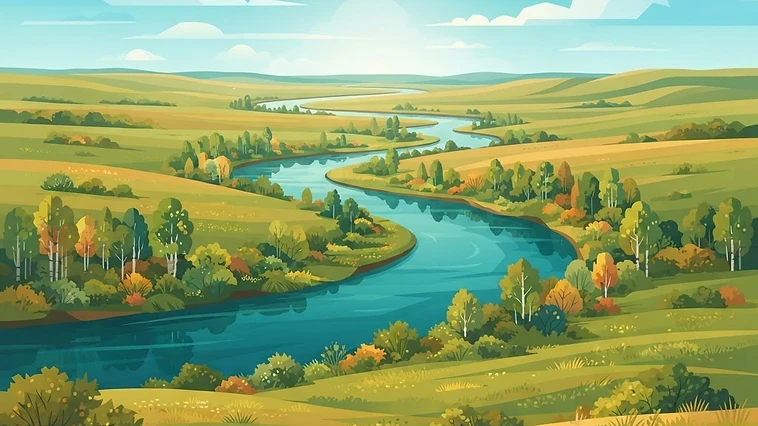
Conceptual illustration of a prairie river valley — illustrative artwork inspired by the South Saskatchewan River region, not a photograph of Muskoday First Nation lands.

Conceptual illustration — not a photograph of Muskoday First Nation lands

MUSKODAY AT A GLANCE

Muskoday at a Glance

TREATY
Treaty 6
TREATY DATE
August 23, 1876
REGISTERED POPULATION
2,595

AS OF AUGUST 2026

CURRENT CHIEF
Chief Ronald Bear
REGIONAL RELATIONSHIP
Saskatoon Tribal Council
LOCATION
Approximately 19 km southeast of Prince Albert
REGISTERED MEMBERS ON OWN RESERVE
751
REGISTERED MEMBERS OFF RESERVE
1,822
FEDERAL BAND NUMBER
371
CURRENT FEDERAL RESERVE PARCELS
3

MAIN RESERVE, RESERVE 99A AND RESERVE 99B

Registered population is not the same measure as the number of people physically living in the community.

ABOUT MUSKODAY

About Muskoday First Nation

Muskoday First Nation is a Treaty 6 First Nation situated along the South Saskatchewan River southeast of Prince Albert, Saskatchewan. Current federal and community sources describe Muskoday as a community with Cree and Saulteaux roots, and its Cree place name is connected to the prairie or grassland landscape.

Muskoday's story is closely connected to land, water and self-determination. Chief John Smith participated in the original Treaty 6 process at Fort Carlton in 1876, and the community later developed a long agricultural tradition along the river. Muskoday went on to become an important leader in First Nation land management, receiving greater authority over agricultural lands in 1978 and later establishing its own Land Code under the First Nations land-management framework.

Today, Muskoday combines community government, health and family services, education, cultural programming, agriculture, economic development and significant infrastructure investment. Its registered membership extends well beyond the home reserve, creating ongoing relationships with Prince Albert, Saskatoon and other parts of Saskatchewan.
LAND & PLACE

Where Is Muskoday First Nation?

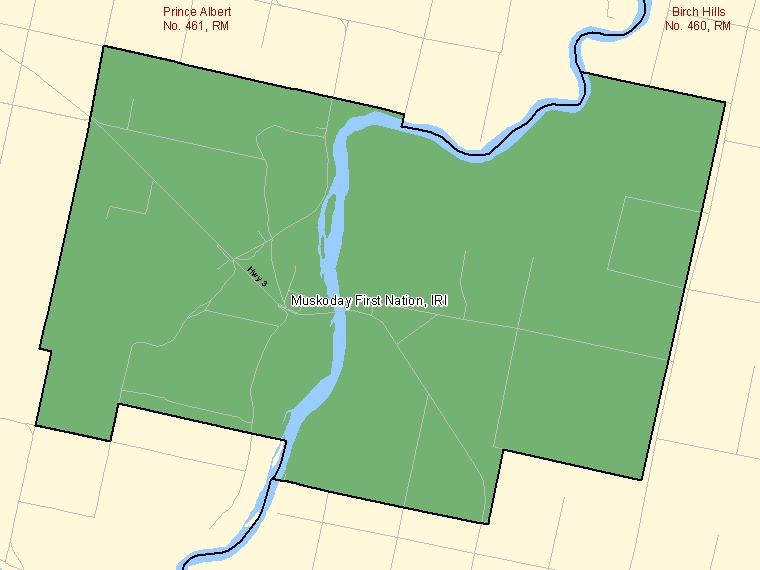
Muskoday First Nation is located approximately 19 kilometres southeast of Prince Albert in central Saskatchewan. The South Saskatchewan River passes through the community and has shaped Muskoday's settlement patterns, agriculture, transportation, traditional land use and modern infrastructure.

The current federal reserve inventory includes the main Muskoday First Nation reserve together with Reserve 99A and Reserve 99B.

Muskoday also has verified land holdings in several other parts of Saskatchewan, including land in the rural municipalities of LeRoy, Paddockwood, Prince Albert and Corman Park.

These additional holdings should be described as Muskoday land holdings unless reserve status for a specific parcel has been independently confirmed.

Current Recorded Reserve Areas
ReserveRecorded Area
Main Muskoday First Nation reserve9,713.9 hectares
Muskoday First Nation Reserve 99A259.0 hectares
Muskoday First Nation Reserve 99B312.7 hectares

Together, the three current reserve entries represent approximately 25,416 acres.

Statistics Canada map showing Muskoday First Nation and the South Saskatchewan River
Statistics Canada map showing the Muskoday First Nation census subdivision and surrounding geography.Source: Statistics Canada, 2011 Census Profile

TREATY 6

Treaty 6 and Chief John Smith

Muskoday's Treaty relationship reaches back to the original Treaty 6 negotiations at Fort Carlton.

Chief John Smith and Muskoday representatives entered Treaty 6 on August 23, 1876. Muskoday therefore belongs to the original Fort Carlton Treaty process rather than a later Treaty 6 adhesion.

Treaty 6 remains an important part of Muskoday's modern identity and government relationships. In 2026, Muskoday joined communities across Treaty 6 territory in marking the 150th anniversary of the Treaty.

mistiko-nāpēw — Chief John Smith

Muskoday recognizes John Smith as its first hereditary Chief.

The contemporary Cree form shared during Muskoday's 2026 Treaty anniversary commemorations is: mistiko-nāpēw — ᒥᐢᑎᑯ ᓈᐯᐤ — "he who builds."

Historical records show Chief Smith taking an active role in determining where the community's reserve would be located and objecting when proposed survey boundaries did not reflect the land the community sought.

His leadership remains part of contemporary Muskoday life rather than only an archival story.

Chief John Smith Bridge

On July 28, 2026, the Highway 3 crossing over the South Saskatchewan River at Muskoday was formally renamed Chief John Smith Bridge.

The name connects Muskoday's first hereditary Chief, Treaty 6, the South Saskatchewan River and a transportation route that continues to serve residents, visitors and regional businesses today.

THE NAME MUSKODAY

What Does Muskoday Mean?

The name Muskoday is connected to the Cree word maskotêw, referring to prairie, plain or grassland.

Historical English translations have also used expressions such as "bald prairie" or "no trees," but the broader meaning is the open prairie or grassland landscape.

Importantly, the name Muskoday did not originate with the Nation's modern administrative name change.

Historical survey and government records used Muskoday as a place or reserve name while federal administration continued to refer to the people as the John Smith Band.

From John Smith Band to Muskoday First Nation

The Nation formally adopted the name Muskoday First Nation in 1993.

The change therefore formalized a much older Indigenous place name rather than creating an entirely new identity.

CHRONOLOGY

Muskoday Through the Generations

  1. 1876

    Chief John Smith and Muskoday representatives enter Treaty 6 at Fort Carlton on August 23.

  2. 1877

    Historical records show the community already cultivating significant acreage along the South Saskatchewan River.

  3. 1878

    The formal reserve survey is completed after discussions concerning the proposed boundary and the inclusion of Crossing Island.

  4. 1884

    The reserve is resurveyed to correct aspects of the earlier river boundary.

  5. 1889

    The reserve is confirmed through the federal Order in Council process.

  6. 1924

    Robert Bear succeeds John Smith as Muskoday's second hereditary Chief.

  7. 1947

    Andrew Bear becomes Muskoday's first elected Chief.

  8. 1963

    The Band Farm and Muskoday's modern agricultural-development era become part of a broader push for greater control over local land management.

  9. 1978

    Muskoday receives delegated authority over its agricultural lands, becoming an early Canadian leader in First Nation land management.

  10. 1993

    The Nation formally adopts the name Muskoday First Nation.

  11. 1998

    Muskoday members ratify the Muskoday Land Code.

  12. 2000

    The Land Code comes into force.

  13. 2007

    Muskoday members ratify the Treaty Land Entitlement settlement.

  14. 2008

    The Treaty Land Entitlement settlement is formally celebrated.

  15. 2024

    Muskoday opens its new $8.6-million water treatment plant.

  16. 2026

    Muskoday marks the 150th anniversary of Treaty 6 and the Highway 3 crossing is renamed Chief John Smith Bridge.

MEMBERSHIP

A Community On and Off Reserve

Muskoday First Nation had 2,595 registered members as of August 2026.

2,595

REGISTERED MEMBERS

AS OF AUGUST 2026

The federal registry recorded:

  • 751 members on Muskoday's own reserve
  • 20 members living on other reserves
  • 2 members on Muskoday Crown land
  • 1,822 members living off reserve

This means a substantial majority of Muskoday's registered membership lives beyond the home reserve.

That wider membership is important to understanding Muskoday's governance, education, employment, family and regional relationships.

Registered Population and Resident Population Are Different

Registered First Nation membership is not the same measure as the number of people physically residing in the community.

For example, the 2021 Census counted approximately 700 residents in the Muskoday First Nation census subdivision.

Makwa Path keeps these measures separate to avoid presenting registered membership as though it were a census resident population.

GOVERNMENT

Muskoday Government

Muskoday First Nation's current Chief and Council serve terms running from March 27, 2025 through March 26, 2027.

CHIEF

Chief Ronald Bear

Term: March 27, 2025 – March 26, 2027

COUNCILLORS

  • Councillor Beryl Bear
  • Councillor Elwin Bear
  • Councillor Kelly Bear
  • Councillor Heather Crain
  • Councillor Jennifer Heimbecker

Administration

Muskoday maintains professional administrative functions covering areas including:

  • executive administration
  • finance
  • human resources
  • membership
  • Council administration
  • grants and proposals
  • lands governance
  • justice
  • education and post-secondary support
  • health and family services
  • employment and training

Chief and Council provide elected governance while administrative departments manage day-to-day service delivery and implementation.

Boards and Committees

Muskoday publicly identifies a range of community boards and committees, including bodies connected to:

  • governance
  • education
  • economic development
  • housing
  • lands
  • finance and audit
  • human resources
  • Elders
  • culture
  • daycare and Head Start
  • waste management
  • community celebrations

Individual committees have different responsibilities and levels of authority. Their roles should not be treated as interchangeable.

Muskoday currently elects Chief and Council under the Indian Act election system.

That election framework exists alongside a much broader Nation administration and Muskoday's separate land-governance authority under its Land Code.

LAND GOVERNANCE

A Leader in First Nation Land Governance

Land governance is one of the most distinctive parts of Muskoday's modern history.

Muskoday had been seeking greater control over its lands for years before receiving delegated authority over agricultural land management in 1978.

The Nation later became one of the original First Nations involved in the Framework Agreement on First Nation Land Management.

Muskoday members ratified the Muskoday Land Code on January 21, 1998, and the Code was brought into force on January 1, 2000.

The Land Code gives Muskoday authority to create laws concerning the development, conservation, protection, management, use and possession of Muskoday lands within the scope of the land-management framework.

Community Decision-Making

Not every major land decision can be made by Council alone.

The Land Code requires direct community ratification for defined consequential matters, including certain long-term land interests, land-use planning, specified resource decisions, land exchanges and amendments to the Land Code.

This creates an important distinction between ordinary Council law-making and matters where Muskoday members directly participate in the decision.

Lands Advisory Committee

Muskoday's Land Code provides for a Lands Advisory Committee with responsibilities connected to land policy, environmental protection, land-use planning and other land-management matters.

The structure also requires representation from a Muskoday member living off reserve.

That provision reflects the importance of Muskoday's large off-reserve membership in the Nation's broader governance system.

LAND BASE & TLE

Land Base and Treaty Land Entitlement

Muskoday's modern land base reflects both its original reserve history and later Treaty Land Entitlement work.

Muskoday pursued a Treaty Land Entitlement claim beginning in the 1990s. Muskoday's members ratified a settlement in 2007, and the settlement was formally celebrated in 2008.

The settlement included approximately $10.2 million, together with additional negotiation, ratification and acquisition costs, and provided a mechanism for Muskoday to acquire additional land.

Muskoday's settlement material allowed for the purchase of up to 38,014 acres under the applicable settlement framework.

Muskoday's audited financial statements provide a more specific implementation milestone: the agreement identified a 6,144-acre shortfall requirement, and Muskoday had purchased 6,650 acres by March 31, 2025.

Acquired land should not automatically be described as reserve land. Land acquisition and conversion to reserve status are separate legal steps.

Regional Muskoday Land Holdings

Current regional information identifies Muskoday land holdings of approximately:

3,880 acres
RM OF LEROY
640 acres
RM OF PADDOCKWOOD
240 acres
RM OF PRINCE ALBERT
55.04 acres
RM OF CORMAN PARK

These properties broaden Muskoday's economic and regional land relationships beyond the home reserve.

LAND & WATER

Land, Water and the South Saskatchewan River

The South Saskatchewan River is one of the central geographic relationships in Muskoday's story.

Early reserve settlement, agriculture and travel developed along the river, and the community sought reserve lands extending across both sides of it.

The river continues to influence Muskoday's transportation, infrastructure, environmental planning and cultural landscape.

Traditional Land Relationships

Muskoday traditional-knowledge research has documented historical and study-period relationships with hunting, trapping, fishing, medicinal plants, berries, wetlands, travel routes and cultural areas beyond the boundaries of the home reserve.

Separate Saskatchewan government records acknowledge Muskoday among the First Nations whose traditional territories include areas associated with the Nisbet, Fort-à-la-Corne and Canwood provincial forests.

These relationships demonstrate that Muskoday's traditional territory is broader than its current reserve inventory.

Makwa Path does not define or draw a complete traditional-territory boundary because the research package does not establish one authoritative boundary polygon.

AGRICULTURE

Agriculture Across Generations

Agriculture has been part of Muskoday's documented history since the earliest reserve era.

Historical records show community cultivation by the late 1870s. Farming and livestock later became important parts of reserve life, followed by grain production and the establishment of the Muskoday Band Farm.

Agriculture also played an important role in Muskoday's push for greater control over its lands, culminating in delegated agricultural-land authority in 1978 and later broader land self-government.

Agriculture and Food Sovereignty Today

A new phase began in 2026 through the Nations Growing Together Agro Alliance: Advancing Indigenous Agriculture, Training & Food Sovereignty.

The federal AgriDiversity contribution runs from 2026 through 2028 and supports an Indigenous-led approach involving:

  • land-based agriculture
  • traditional permaculture
  • food sovereignty
  • Indigenous knowledge
  • training
  • ecological resilience

This initiative connects Muskoday's long agricultural history with current food, skills and economic-development goals.

Bison

Muskoday also maintains a contemporary relationship with bison.

Current Nation information and audited financial records support ongoing bison/livestock activity.

Current herd size, commercial revenues and detailed operating structure are not included because they have not been sufficiently verified for public use.

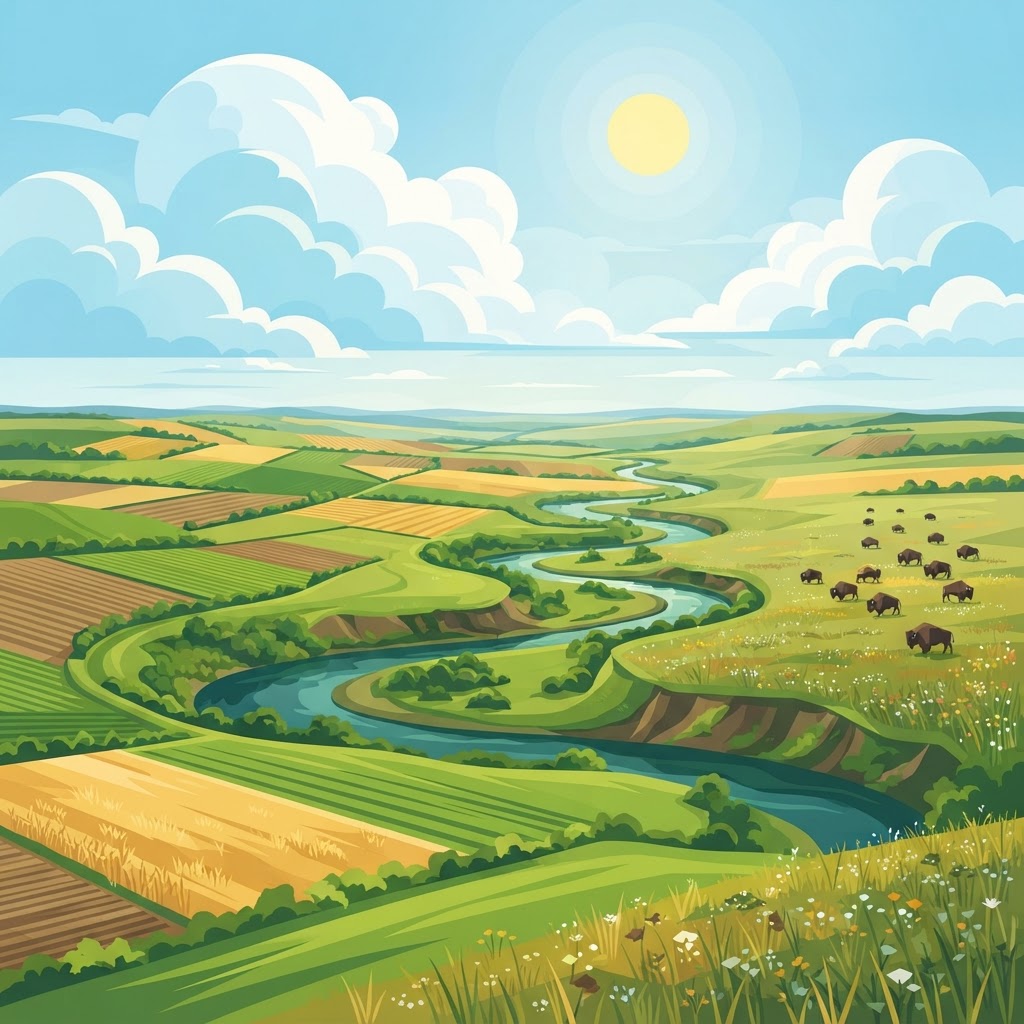
Conceptual illustration of prairie farmland with bison in a distant meadow — illustrative artwork, not a photograph of Muskoday First Nation.

Conceptual illustration — not a photograph of Muskoday First Nation

WATER & ENVIRONMENT

Modern Water and Environmental Infrastructure

Muskoday opened a new $8.6-million water treatment plant in August 2024.

The system includes new wells and groundwater pumping infrastructure and uses technologies including biofiltration and reverse osmosis.

The plant supports homes and major community facilities, including the health centre, school, daycare and other community infrastructure.

It also gives Muskoday increased ability to treat, monitor and manage its own water supply.

  • New Water Treatment Plant

    COMPLETED — OPENED AUGUST 2024

    The $8.6-million plant uses biofiltration and reverse osmosis and serves homes and major community facilities.

  • Water booster infrastructure

    VERIFIED PROJECT — STATUS NOT YET CONFIRMED

  • Wastewater lagoon improvements

    VERIFIED PROJECT — STATUS NOT YET CONFIRMED

  • Community drainage and flood-mitigation work

    VERIFIED PROJECT — STATUS NOT YET CONFIRMED

  • A second community access road

    VERIFIED PROJECT — STATUS NOT YET CONFIRMED

These projects must be presented according to their verified project status. None is described as completed or operational, because that status has not been confirmed.

COMMUNITY GROWTH

Building for Community Growth

Muskoday has been carrying a substantial recent capital-development program.

For the year ended March 31, 2025, Muskoday's audited financial statements reported approximately $7.61 million in tangible capital-asset acquisitions and approximately $15.8 million in assets under construction.

Current and recent development activity includes projects connected to:

  • residential growth
  • water
  • wastewater
  • drainage
  • transportation
  • school infrastructure
  • community facilities
  • 40-Lot Subdivision

    VERIFIED PROJECT — COMPLETION NOT YET CONFIRMED

    A planned 40-lot subdivision has undergone federal environmental assessment. The project includes roads, underground utilities, grading and related servicing.

  • Cultural Centre

    VERIFIED PROPOSED PROJECT — OPENING NOT YET CONFIRMED

    A proposed cultural centre has also undergone project assessment. The concept calls for a substantial facility near the Elders Lodge intended to support cultural events, ceremonies, gatherings and workshops.

ECONOMY

Economic Development at Muskoday

Muskoday's economy includes Nation-controlled businesses, land and lease activity, investments, agriculture, economic-development initiatives and major community infrastructure.

Muskoday Economic Development Authority

The Muskoday Economic Development Authority, or MEDA, functions as an important economic-development vehicle for the Nation.

Muskoday's audited financial structure continues to include the Muskoday Economic Development Authority Limited Partnership.

MEDA has participated in economic activity spanning retail, energy, automotive fleet management and business development.

A current MEDA Executive Director is not named on this page because the latest role-holder has not been independently freshness-verified for this content package.

Muskoday Store and Gas Bar

The Muskoday Store and Gas Bar is a significant Nation-controlled commercial asset.

The current facility opened in 2023.

For the year ended March 31, 2025, Muskoday's audited financial statements recorded approximately $4.587 million in gross retail sales associated with retail operations.

That number represents gross sales. It must not be described as profit.

The facility includes convenience retail activity and fuel sales and also serves as an important community and regional business asset.

Investments and Commercial Relationships

Muskoday's March 31, 2025 audited statements also record investment interests in Saskatoon Tribal Council-related entities together with a 40% interest in Ironhorse Fleet Management Limited Partnership.

Ironhorse is associated with automotive fleet management.

Muskoday also reported significant lease and rental income, illustrating the continuing economic role of the Nation's land and asset base.

RENEWABLE ENERGY

Renewable Energy

Muskoday Economic Development Authority has developed renewable-energy initiatives, including a 324 kW solar-generation project.

The project itself is verified, and renewable-energy development can be described as part of Muskoday's economic diversification.

This page does not claim a specific current 2026 electricity-production level, annual output or operating performance for the project, because that has not been verified.

A previously identified rooftop solar initiative also remains outside present-tense operating claims until its current status is reverified.

SKILLS & EMPLOYMENT

Skills, Employment and Entrepreneurship

Muskoday maintains employment and training services intended to connect members with education, skills development and employment opportunities.

The Nation's post-secondary program, community employment functions and economic-development activity all contribute to this broader workforce system.

Muskoday also has a history of supporting youth and member entrepreneurship through business-development programming.

Older entrepreneurship programs demonstrate that support history, but this page does not treat former program participants as current businesses without individual verification.

Current member-owned companies may be added later only after each business has been independently confirmed.

EDUCATION

Education at Muskoday

Muskoday First Nation Community School currently serves students from Pre-K through Grade 8.

The school combines academic learning with a wider support structure that includes cultural programming, land-based learning, special-services supports, educational assistants, counselling and outdoor or physical education.

Land-Based and Cultural Learning

Muskoday continues to strengthen connections among students, educators, Elders, Knowledge Keepers and the land.

Current education recruitment and programming emphasize Cree values, Indigenous ways of learning and local outdoor environments.

Transition to High School

Students continuing beyond the local Grade 8 program transition into regional schools, including schools in the Saskatchewan Rivers Public School Division.

During the 2024–25 school year, dedicated Muskoday transition and graduation supports assisted Muskoday students attending regional high schools.

Those outcome figures are historical 2024–25 results and should remain date-qualified.

Post-Secondary Education

Muskoday also operates a Post Secondary Student Support Program for eligible members.

The program supports members pursuing post-secondary education under Muskoday's applicable education policies and funding framework.

HEALTH & WELLNESS

Health and Wellness

The Muskoday Community Health Centre is the primary local hub for a wide range of health and wellness services.

Community programs include areas such as:

  • community nursing
  • maternal and child health
  • home and community care
  • chronic-condition support
  • patient transportation
  • mental wellness
  • addictions support
  • counselling and therapeutic services
  • family wellness
  • youth activities

Traditional medicines, including the four sacred medicines, may also be available through the local wellness environment.

Muskoday works within a broader regional system that includes Saskatoon Tribal Council wellness services and provincial, federal and specialist services where needed.

The overall service model is best understood as: Muskoday local services → regional/STC professional support → provincial, federal or specialty services where required.

FAMILY SUPPORT

Children and Family Supports

Muskoday has been developing a stronger community-based family wellbeing and prevention system.

Local Community and Family Well-Being work includes areas such as:

  • family support
  • prevention
  • family enhancement
  • child-placement support
  • intervention and navigation

Muskoday is also building capacity connected to future First Nation jurisdiction in child and family services.

That work should not be described as though Muskoday has already fully replaced every outside child-protection authority.

Saskatoon Tribal Council currently remains an important regional service and delegated child-welfare partner.

JORDAN'S PRINCIPLE

Jordan's Principle Support

Muskoday has a dedicated service-access function connected to Jordan's Principle.

The role helps children, youth and families navigate barriers across First Nation, provincial and federal systems and identify available supports.

$2.935 MILLION

JORDAN'S PRINCIPLE CONTRIBUTIONS RECORDED

YEAR ENDED MARCH 31, 2025

For the year ended March 31, 2025, Muskoday's audited statements recorded approximately $2.935 million in Jordan's Principle contributions received.

That figure represents program funding recorded in the Nation's financial statements. It does not represent the number of children served, the number of applications approved or an amount received by individual families.

COMMUNITY LIFE

Community Life Across Generations

Awasis Daycare and Head Start

Muskoday Awasis Daycare/Headstart Centre is an active community institution supporting children and families.

Current capacity, enrollment, operating hours, age range and wait-list information are not included because they have not been sufficiently verified for this package.

Youth

Youth programming at Muskoday connects recreation, sport, culture, wellness and community participation.

Current Nation activity also includes efforts to strengthen recreation planning and governance.

Elders

Elders and Knowledge Keepers play important roles across Muskoday's education, culture and community systems.

Muskoday maintains an Elders Committee and integrates Elders and Knowledge Keepers into learning, cultural and community-support settings.

Language and Culture

Muskoday continues to support Cree language and cultural learning.

A multi-year federally supported Elders Cree/Cultural Initiative runs through 2030 and adds to the community's broader cultural, educational and land-based programming.

Culture on this page is presented as part of contemporary Muskoday life, not only as historical heritage.

RECREATION

Recreation and Community Connections

Sport, recreation, cultural programming and community gatherings are part of Muskoday's broader wellness system.

Community activity includes youth recreation, cultural events, family programming and public gatherings.

These connections support physical wellness, youth engagement, family relationships and community participation.

Verified upcoming public gatherings are displayed separately in the Upcoming Community Events & Gatherings section and are managed through a rolling 12-month event-verification process.

JUSTICE & SAFETY

Justice and Community Safety

Muskoday maintains its own Justice function and a community-safety model that works alongside outside justice and policing systems.

The local architecture includes: Muskoday Justice → Community Safety Officers → community monitoring and safety systems → RCMP collaboration.

Muskoday also identifies the Muskoday Intervention Circle within its justice programming.

The existence of the program is verified, but detailed current operating procedures are not expanded on this page until reverified.

Healing Hearts

Muskoday is also connected to the federally funded Healing Hearts: Empowering Indigenous Families.

The multi-year initiative provides culturally grounded supports for families affected by missing and murdered indigenous people and related loss. Program elements include areas such as:

  • healing
  • grief and loss support
  • peer support
  • cultural connection
  • advocacy
  • outreach

ADDICTIONS & HEALING

Addictions, Healing and Regional Treatment

Muskoday's Community Addictions Prevention function provides culturally responsive prevention, support, assessment and referral services.

Regional Saskatoon Tribal Council wellness services add counselling, crisis response, case management, aftercare, harm reduction and traditional wellness connections.

White Buffalo Treatment Centre

White Buffalo Treatment Centre is located at Muskoday First Nation but is a distinct regional Indigenous treatment organization.

It is not a Muskoday First Nation department.

White Buffalo provides Indigenous youth treatment services involving counselling, culture, education, addictions and mental-health supports, recreation and equine-assisted learning.

Its governance involves multiple Saskatchewan tribal councils, including Saskatoon Tribal Council.

A transition home located at Muskoday also supports young people moving from treatment toward greater independence, education and stable living.

MUSKODAY TODAY

Muskoday Today

Muskoday's current story combines Treaty history with active Nation-building.

Treaty 6 — 150 Years

In 2026, Muskoday participated in the 150th anniversary of Treaty 6.

The Nation also received support for From Treaty to Today: 150 Years of the John Smith First Nation.

The initiative connected Muskoday's historical leadership with contemporary community identity.

Chief John Smith Bridge

The July 2026 renaming of the Highway 3 crossing as Chief John Smith Bridge created a permanent public connection between Muskoday's first hereditary Chief, Treaty 6 and the South Saskatchewan River.

Agriculture and Food Sovereignty

The 2026–2028 Nations Growing Together Agro Alliance is advancing Indigenous agriculture, training and food-sovereignty objectives.

Community Development

Muskoday continues to advance major infrastructure, housing, servicing and community-development projects.

Where specific projects remain in planning, assessment or construction stages, those statuses remain visible rather than being converted into completion claims.

COMMUNITY LIFE

Upcoming Community Events & Gatherings

No upcoming public Muskoday event has been added to this profile at this time. Makwa Path rechecks community events regularly and adds verified public gatherings when current information is available.

FINANCING

Financing Options Through Makwa Path

Muskoday members, families and business owners may have very different financing needs.

Makwa Path provides several starting points so visitors can explore the path that best matches what they are trying to accomplish.

Those starting points include pathways to explore auto, business, equipment, commercial-vehicle and working-capital financing, while availability, approval and terms depend on the applicant, transaction and available programs.

AUTO FINANCINGAuto FinancingLooking for financing for a vehicle? Makwa Path can help visitors explore financing options for a car, SUV, truck or van. Approval, rates, terms and lender requirements vary by applicant and transaction.EXPLORE AUTO FINANCING

Financing availability and terms depend on the applicant, transaction and available programs.

NOT SURE WHICH PATH FITS?

Not Sure Which Financing Path Fits?

You do not need to know the exact financing product before getting started.

Tell Makwa Path what you are trying to accomplish, and the enquiry can be directed toward the most relevant financing pathway.

QUESTIONS

Questions About Muskoday First Nation

Where is Muskoday First Nation?

Muskoday First Nation is located approximately 19 kilometres southeast of Prince Albert, Saskatchewan, along the South Saskatchewan River.

Is Muskoday First Nation part of Treaty 6?

Yes. Chief John Smith and Muskoday representatives entered Treaty 6 at Fort Carlton on August 23, 1876.

Was Muskoday a later Treaty 6 adhesion?

No. Muskoday's Chief John Smith participated in the original Fort Carlton Treaty 6 process in 1876.

What does Muskoday mean?

The name is connected to the Cree word maskotêw, referring to prairie, plain or grassland. Historical translations have also used expressions such as "bald prairie."

What was Muskoday First Nation formerly called?

Federal administration historically referred to the community as the John Smith Band. The Nation formally adopted the name Muskoday First Nation in 1993, although Muskoday had already been used as a place and reserve name for generations.

Who is the current Chief of Muskoday First Nation?

The current Chief is Ronald Bear, serving a term from March 27, 2025 through March 26, 2027.

How many registered members does Muskoday First Nation have?

Muskoday had 2,595 registered members as of August 2026.

How many Muskoday members live on reserve?

The federal registry recorded 751 registered members living on Muskoday's own reserve as of August 2026.

How large is Muskoday First Nation?

The current federal reserve inventory includes the main Muskoday reserve at 9,713.9 hectares, Reserve 99A at 259.0 hectares and Reserve 99B at 312.7 hectares. Together, they total approximately 25,416 acres.

What is the Muskoday Land Code?

The Muskoday Land Code is the Nation's land-governance framework under the First Nations land-management system. Muskoday members ratified it in 1998, and it came into force in 2000.

What is Muskoday's Treaty Land Entitlement?

Muskoday pursued a Treaty Land Entitlement claim to address the amount of reserve land owed under the Treaty land formula. Members ratified a settlement in 2007, and additional land acquisition has continued under the settlement framework.

What grades does Muskoday First Nation Community School serve?

Current 2026 school information identifies the community school as serving Pre-K through Grade 8.

Does Muskoday First Nation have local health services?

Yes. Muskoday Community Health Centre provides a broad range of local health and wellness services, supported by regional and external health systems where required.

Does Muskoday have Jordan's Principle support?

Yes. Muskoday has a dedicated service-access function connected to Jordan's Principle to help children, youth and families navigate available supports.

What businesses does Muskoday First Nation operate?

Muskoday's economic structure includes the Muskoday Economic Development Authority and the Muskoday Store and Gas Bar, together with investments, lease activity, agriculture and other economic-development interests.

What role does agriculture play at Muskoday?

Agriculture has been part of Muskoday's documented history since the 1870s and remains connected to land governance, economic development and current food-sovereignty initiatives.

Is White Buffalo Treatment Centre operated by Muskoday First Nation?

White Buffalo Treatment Centre is located at Muskoday, but it is a distinct regional Indigenous treatment organization governed through a multi-tribal-council structure.

Can Muskoday members explore auto financing through Makwa Path?

Yes. Makwa Path provides an auto-financing pathway for people looking to finance a car, SUV, truck or van. Approval and financing terms remain subject to the applicant, transaction and available lender programs.

Can Muskoday businesses explore equipment or business financing?

Yes. Business owners and entrepreneurs can explore business, equipment, commercial-vehicle and working-capital financing pathways through Makwa Path and the broader BIZII Finance Network.

ABOUT THIS COMMUNITY PROFILE

About This Community Profile

Makwa Path builds community profiles from publicly available Nation, Treaty, government, financial, educational and regional sources. Facts that change over time are reviewed periodically, and project or program status is qualified where current completion or operating information has not been confirmed.

Community profile factual review: October 1, 2026

Makwa Path is a financing and information platform and is not the official website of Muskoday First Nation. Community information is provided to help visitors understand the community and explore relevant resources and financing pathways.

Help us keep this profile accurate

Community information can change. If you represent Muskoday First Nation or see something that should be updated, let Makwa Path know.

YOUR NEXT STEP

Explore Your Next Step

Whether you are looking for a vehicle, planning a business purchase, financing equipment or simply trying to understand what options may be available, Makwa Path provides several ways to begin.

Tell us what you are trying to accomplish. Financing availability and terms depend on the applicant, transaction and available programs.